Showing posts with label London for Nature Lovers. Show all posts

Sunday, June 12, 2011

Gardens Galore

What better way to experience London than by visiting its garden squares? But most of these spaces are private and not open to the public. Ah, if only one could gain access to these magical places, what a wealth of culture, history and romance would suddenly be accessible to London residents and visitors alike.

Well, thanks to the London Parks & Gardens Trust, you can. For one weekend in June, London throws open its most lovely, fragrant, intimate and historic outside spaces for any one to enjoy. And it’s a great bargain. For 10 pounds a head, you gain access to more than 200 green spaces over the course of 48 hours. Today, we managed to visit 9.

Highlights for us included the three-acre Edwardes Square, that was built between 1811 and 1819 by a Frenchman rumored to be an agent of Napoleon. This oasis of calm between High Street Kensington and Earls Court has meandering paths, a croquet lawn, a rose pergola, and grass tennis court. The full time gardener still lives in the Grecian-style lodge at the entrance.

We also loved visiting the beautiful and serene Islamic garden on the roof of the Ismaili Centre in South Kensington. It’s a little bit of the Alhambra right in the centre of London. And we learned a lot about the Ismailis as well.

In all of the nine gardens we saw today, we were generously welcomed by volunteers who are rightly proud of what they have cherished and preserved. For anyone who loves gardens and loves London, the Open Square Weekend is unmissable so start planning now. Next year’s Open Garden Squares Weekend is 9-10 June 2012. More information available on www.opensquares.org.

Thursday, October 15, 2009

Take a Two Minute Trip to the Arctic


Who knew freezing your butt off could be so much fun?

When I heard that National Geographic had opened a store on London’s Regent Street, I thought:
It will be worthy
It will be well done
But exciting retail?
I doubt it.
Well, I was wrong.

Yesterday, on the way to look at kitchen counters at John Lewis (speaking of worthy but boring retail) I stumbled into the Nat Geo emporium and had a blast – literally.

Of all the things to do and see in this huge, glossy, dare I say it, sexy store, it’s hard to beat taking a spin in the testing chamber where you can try out your expedition gear in simulated extreme weather conditions while a thermo camera takes a pictures of your body’s temperatures. Even though I was in street clothes, the friendly member of staff was happy to let me have a go. Oh yes, it was super windy and cold but where else in London can you take a two minute trip to the Arctic?

In addition to the testing chamber, the store is filled with nifty products that would be great to have whether you are venturing down the block or around the globe. I found the shoes, boots, bags and backpacks particularly seductive. As you would expect from Nat Geo, there are inspiring pictures everywhere, a gallery, a space for presentations, a section for children, and a groovy looking café (the only busy place in the store) with world food and music.

It’s hard to imagine that this enormous store filled with relatively esoteric stuff will make lots of money but as an exciting retail destination and as an expression of the brand, it is a runaway success. In the guest book for the store’s current special exhibition on Finland, a young visitor, who obviously had a great time on his visit, put it this way: “I LOVE National Geographic” and that about sums it up.

The National Geographic store can be found at 83 – 87 Regent Street. There is another store in Singapore.

The photo of the testing chamber taken by Philip Meech & Tim Kavanagh is from the store’s website.

Tuesday, February 03, 2009

I Love London When Its Snowing


With 8 inches of snow in London, transport was at a standstill. Six million people did not make it in to work and thousands of schools were shut.

Here's what we got up to yesterday:

Built snowmen

Threw snowballs

Went sledding

Would have gone cross country skiing but couldn't find the boots

Heard a chorus of birds singing in a silent city

Spoke to people we didn't know. Smiled at them too.

With temperatures below freezing, this stuff is not going anywhere anytime soon so today we might go out and do it all again.

Monday, June 26, 2006

Kew Gardens

Posted by Picasa

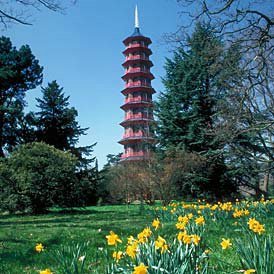
The best place I know to beat the heat in London, especially if you have children in tow, is the Royal Botanic Gardens in Kew. The 300 acre site offers a massive amount of royal and horticultural history, remarkable buildings including a historic palace, the largest collection of plants in the world, manicured gardens and lawns, a play area, and even a herd of sheep and wallabies which have been added to recreate the menageries of Kew’s past.

In many ways, Kew stands as a monument to the British monarchy's love of the great outdoors and it was the royals of the 18th century who took over, expanded and improved what we now think of as Kew Gardens. With the help of architects such as William Chambers and Capability Brown and botanists such as Joseph Banks who sailed with Captain Cook, Princess Augusta and later her son King George III transformed Kew into an exotic horticultural world unto itself.

On a hot day recently, we pitched up at Kew with Eloise and were able to visit two monuments which have been closed to the public for years: the 163 foot high Pagoda and Kew Palace, the former home of King George III.

In 1761, William Chambers, inspired by visits to China, constructed the Pagoda as a surprise for Princess Augusta. How you can keep what some scholars consider the tallest secular brick building of its day a secret, I don’t know. My favourite factoid is that during World War II, holes were cut into each floor through which bomb designers would test their designs.

This summer, for the first time in recent memory, you can climb the 253 steps to the top of the structure. Eloise loved this part of our visit, particularly the extensive health and safety admonishments about what to do if you felt faint, felt chest pains, felt dizzy or generally unwell. The view from the top is nice although London is no New York or Paris from a panorama point of view. Still, the climb was a highlight of our visit.

Equally fun was our time in the newly reopened Kew Palace following a ten year restoration. Originally built by a London merchant, the house was used by the royal family between 1728 and 1818. Today, the intimate palace tells the moving story of King George III, his wife and their 15 children which began in domestic happiness and ended in madness (which we now know was illness) confinement and constitutional crisis. The decorations of the house have been restored to what they would have looked like in the early 1800s and include family memorabilia such as a doll house which the King’s daughters decorated themselves (found recently in a New York City antique store) and George III’s harpsichord.

Hauntingly, the top floor rooms have been left untouched for almost two centuries when the upstairs rooms served as a virtual prison for the King’s unmarried daughters. With Kew Palace, one gets to experience a beautifully restored, historic Royal Palace with a great story and without the crowds one finds at Kensington Palace or Hampton Court.

In addition to the Pagoda and Kew Palace, we also loved our visit to Queen Charlotte’s Cottage, a thatched rustic building which the Queen used for picnics and family retreats. The cottage was originally part of a menagerie which included such exotic animals as kangaroos and buffalo. As we walked around this perfect idyll of rural bliss, I also thought about Marie Antoinette playing shepherdess at the Petite Trianon and the craving of royals to pretend they are peasants. Eloise couldn’t be bothered with this but she did think it was an excellent idea to build a whole house just for picnics.

No visit to Kew would be complete without a “whip round” the glass houses which are justifiably famous and quite spectacular. In the Temperate House, you will find the Chilean Wine Palm which is over 16m high and is the world’s largest indoor plant. The Palm House recreates conditions similar to a tropical rainforest and in the Princess of Wales conservatory you can visit 10 different climatic zones. I’m not much of a botanist but I found the sheer scale of Kew’s collections exciting.

There are several restaurants within the Gardens. We had a snack at The Orangery Café and Restaurant found in a lovely Grade I building with a fine terrace for dining on a nice day. The Orangery also serves afternoon tea. In the Pavilion by the Pagoda, burned down by suffragettes in 1913 and rebuilt in the 1920s, there is a self-service cafeteria which also has a children’s menu.

As I write this post, our little micro heat wave has broken, Wimbledon has started and so, of course, it is pissing down rain. Equally predictable is the fact that when the tennis folks leave town, the sun will come back out and the temperatures will soar. When they do, I’ll head straight back to Kew.

Kew Gardens

Royal Botanic Gardens Kew
Richmond
Surrey
TW9 3AB
England

Information line: +44 (0)870 751 5179

Admission prices to the Royal Botanic Gardens Kew until 31 October 2006
Adult: £11.75
Concessions: £8.75
Children under 17: Free (but must be accompanied by an adult).

Please note: Admission to Queen Charlotte's Cottage is included in this price.
Admission prices to Kew Palace
Adult: £5.00
Concessions: £4.00
Children (5 - 16 accompanied by an adult): £3.00
Children under 5: Free

(NB: admission ticket to the Kew Gardens must be purchased for access to Kew Palace - for gardens admission prices see above)

Transportation

Take the District Line (Richmond Train) to Kew Gardens station or in summer take a Thames River Boat from Westminster Pier. The journey takes approximately 1 ½ hours and costs £10.50 for adults, £5.25 for children one way with family tickets also available.

Monday, June 19, 2006

The Best Things to do in London in the Heat

Posted by Picasa


Occasionally, it gets really hot in London. When it does, there is little relief for the summer visitor. Most of the transportation, accommodation and entertainment options are not air conditioned and certainly not to a level a North American visitor would expect. If you find yourself in London on one of our few fine days with temperatures soaring, I have several suggestions for places you can visit which will get you out of the concrete and away from the crowds.

My first suggestion is to do what Londoners do and beat the heat by visiting a National Trust country house, but in this case, instead of renting a car or hiring a driver, take the Underground to Osterley Park, set smack in the middle of west London. From the Underground Station on the Piccadilly Line, the Park is a half mile walk through suburban sprawl but worth the effort when one enters the park, wandering past grazing horses and cattle to arrive at Osterley House, a magnificent example of an 18th century country villa surrounded by 350 acres of parkland and gardens.

The original house at Osterley was built in Tudor times by Queen Elizabeth’s financial advisor, Sir Thomas Gresham. The crumbling Tudor mansion was acquired by the Child’s banking family in 1713 and as the family’s wealth grew, the most fashionable architect of his day, Robert Adams, was commissioned to turn the place into “the palace of palaces”. Even if you have little interest in country house interiors, you can’t help but be excited by the exuberance and elegance of these rooms. And while everyone else is sweltering back in the city centre, you can wander through this grand house essentially by yourself.

The parklands and gardens which surround the house are massive and lovely and perfect for walking. If you don’t mind hauling a picnic along with you, the grounds offer beautiful places to eat “au plein air” with lots of shade. Leftover bread is perfect for feeding the ducks. Alternatively, there is a National Trust Tea Room in the 16th century stables with outdoor tables. Although you are in the centre of a huge estate, if you have a pair of earphones left over from your airplane goody bag, bring them along because the noise from the thundering M4 Motorway, the Great West Road and the nearby Heathrow Airport belies the otherwise bucolic experience. With that said, without the audio, you would swear you were in the middle of the countryside which is not bad considering you are only a 30 minute subway ride from Piccadilly Circus.

N.B. While the grounds are open daily, access to the house is from March 4 to October 29 and the days vary according to the time of year. From March 4 – March 26, the house is open Saturday and Sunday from 1-4:30 and from March 29 – Oct 29, from Wednesday to Sunday.

Osterley Park & House
Jersey road
Isleworth, Middlesex TW74RB
Tel: 020 8232 5050
01494 755566 (Infoline)
Fax: 020 8232 5080
Osterley@nationaltrust.org.uk
Tube Station: Osterley on the Piccadilly Line


Photo of Osterley State Bedchamber courtesy of National Trust website

Friday, July 08, 2005

Brompton Cemetery - Not Just for Joggers or Bloggers


As I ran through west London this morning, following yesterday’s terrorist explosions which killed at least 37 and wounded hundreds more, I saw people going about their business in a purposeful way, in that way that is so familiar to me now, of a population that takes the business of “getting on with it” very seriously. I don’t know why exactly, but I decided to visit the Brompton Cemetery on my morning jog today. Probably it had something to do with the terrible bombings. It starts you thinking.

Once inside the Brompton Cemetery, my scene changed from scores of resolute commuters to dog walkers, fellow joggers, bicyclists, an alcoholic well into his daily quota and according to the sign at the front, roughly 210,000 permanent residents. Part wildlife preserve, part Hollywood set, here is the perfect line-up of romance, theatre and history. As birds sang and squirrels scampered, I stopped and read story after story of beloved wives and mothers, Generals, scientists and musicians and so many lost babies. After the chaos and destruction of the day before, the Brompton Cemetery was a strangely serene and peaceful place.

All cemeteries tell stories and that is what I like about them, stories about families, fashion, disease, love, war, immigration and death. The great London Victorian public cemeteries, such as Brompton and Highgate, established to handle the explosion of London’s population following the Napoleonic Wars tell remarkably vivid stories about the city, its inhabitants and their pre-occupations. And needless to say, cemeteries are not crowded or touristy.

You can visit the Brompton Cemetery daily from 8:00 AM to dusk. The closest tube is West Brompton on the District Line. The cemetery is managed by the Royal Parks and more information can be found at

http://www.royalparks.org.uk/parks/brompton_cemetery/about.cfm