Monday, July 24, 2006

America's Best College Towns

Posted by Picasa
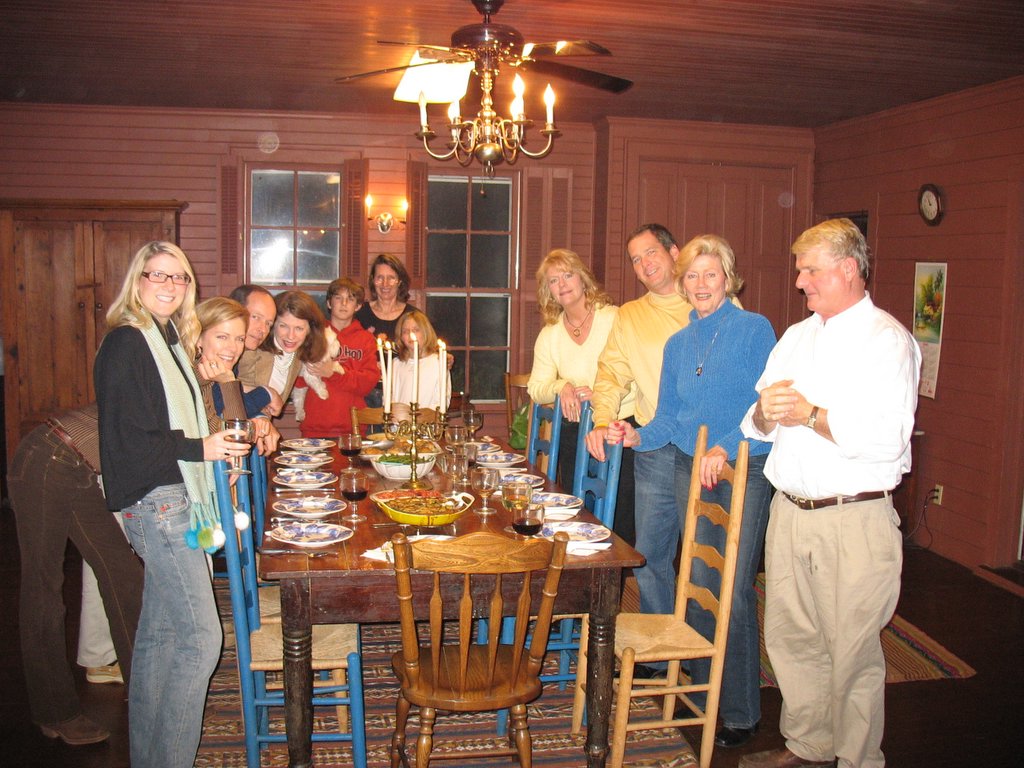
We are a divided family. We divide over universities, not all universities mind you, just two, the University of North Carolina at Chapel Hill (known as Carolina) and Duke University. These rival schools, located a few miles apart, hate each other passionately. It’s an old story which contains a bit of “Gone with the Wind” and a bit of “Bonfire of the Vanities”. Mostly it is a problem with basketball. On the day that I visited Duke, there was a young man walking through the engineering school with a t-shirt which screamed, “CAROLINA SUCKS”, just so you get a feel for the depth of the problem.

The bulk of my family have always strongly supported Carolina which makes sense since they are Carolinians but Duke has made inroads in recent years. My parents now use Duke’s hospital (big vote of confidence). In addition, my son applied to one of their graduate schools. His girlfriend, Alison, is a graduate. Brick by brick, we loyal Carolina supporters have been drawn into Duke’s powerful orbit but still, I take exception to that t-shirt.

For visitors who could care less about who hates whom, both towns, Chapel Hill for UNC and Durham for Duke offer crowd-free, fun places to visit. Both Universities have lots of things to do and see, most of which are free or priced for students. Back in November, my friend Mase wrote a wonderful post for NoCrowds about visiting Chapel Hill, making the case that the best way to experience the best America has to offer is to visit its college towns. Following on from that idea and to even out the playing field and in the interest of family harmony, yesterday I asked my son’s friend, Alison, if she would give me an insiders’ tour of Durham and the Duke Campus. Here is what we did.

We parked. You may laugh but parking at universities is often a huge problem, mostly driven by the fact that almost all American students have cars. To Duke’s credit, they have built a big new parking lot on the West Campus and this problem is mostly solved, at least for now. Alison says things will get more difficult when the full complement of students is back on campus.

We began our tour of Duke at their bookstore where I like to begin every university visit. In this case, I could have skipped it. The Duke bookstore is really nothing special.

What is special is the monumental chapel next door which has the metrics of a mind blowing cathedral: seating for 1,670, seventy-seven stained glass windows containing 800-900 figures made from over 1 million pieces of glass, three organs, a fifty bell carillon, and a fine portal with sculpted figures of a curious collection of luminaries such as Savonarola, Martin Luther, Thomas Jefferson and Robert E. Lee (and who says Duke is just for Yankees?). I’ve been to countless churches and cathedrals in my time, but when we visited the Duke Chapel one of the three organs was playing and the combination of the music, the scale and the grandeur of the place made the visit uplifting and memorable. There is a sheet at the entrance with information for a self-guided tour (not great) and a much more useful brochure, “The Guide for Visitors” which I would definitely pick up.

After our visit to the Chapel, we made our way to the Sarah Duke Gardens, a short walk away. Occupying 55 acres the Gardens are recognised as one of the premier public gardens in the United States which attract more than 300,000 visitors annually. But don’t worry, the size of the place absorbs the numbers easily. On the day we visited, it felt like we were the only people there.

The gardens were designed by Ellen Shipman (1869-1950), a pioneer in American landscape design. Duke Gardens is considered Shipman’s greatest work. There are five miles of walks and pathways, areas devoted to flora of the southeastern United States, an area devoted to the plants of eastern Asian with lovely rock gardens, foot bridges, stone lanterns and a teahouse shelter. As I said before in my post about Kew Gardens in the United Kingdom, I’m not much of a gardener, but I loved my visit to the Sarah P. Duke Gardens and I respect the way they have devoted so much resources to the preservation of great American landscape design.

After our visit to the Garden, we wandered through the gigantic University hospital complex which, as I explained above, now tends to the medical needs of my parents. I suspect that if you are a patient, the “in your face” scale of the place is comforting but for me, I kept thinking about some of the Victorian era hospitals we still have in Britain and shake my head at this modern medical megalopolis. The place is so big that it has its own mini train (which looks like the little pods from Woody Allen’s movie “Sleeper”) to carry people around. Anyway, suffice it to say that if you take ill during your visit to Durham, you will receive some of the finest medical care to be found in the United States.

Following our tour of the campus, Alison suggested we get a sandwich at Fowlers on South Duke Street near the East Campus. Once again we found a parking place straight away. Fowlers is in a large converted warehouse with a café, a delicatessen with a very good selection of foreign foods, a large cheese selection, a butcher and a fishmonger. You can eat outside on the porch if you like. It was far too hot for that the day we were there. I had the homemade pastrami which was excellent even if I did have to send the first sandwich back because they used the wrong bread. I would love to give this place a better review because management obviously cares, in the right way, about food and so much of what is served is of superior quality. Still, on the day of our visit, I felt that staff was well intended but way too disorganised and it distracted from the experience. According to Alison, good meals near campus can also be had at Elmo’s Diner which serves inexpensive good southern food and great breakfasts as well as the Cosmic Cantina for burritos and pitchers of beer.

Following our lunch, we drove around the East Campus and past a Durham Shrine to fine food – the Magnolia Grill. Founded by chef owners Ben and Karen Barker, the Magnolia Grill serves sophisticated and beautifully prepared versions of traditional southern food and is one of my favourite places to eat in the South. Sadly, there was no time for a meal during this visit. Reservations can be hard to come by, but go if you can get a table.

After lunch we toured the East Campus, the highlight for me being the series of colourful benches built by students in front of their dorms which they happily burn and build again when Duke beats Carolina in basketball. Go figure. After that, we got back in the car and headed for Chapel Hill for some ice cream at Cold Stone on Franklin Street where, if you leave a tip, the happy workers, one of whom is my cousin, will sing you a funny little “tip song”.

Going back to Jeff Mason’s point that the best way to see America is by visiting its college towns, I highly recommend making Durham and Chapel Hill a stop on any tour of the American South. The attractions are interesting, the people are friendly, the food is great, you can park your car, and Carolina, for the record, definitely does not suck.

Good Food in Durham

The Magnolia Grill
1002 Ninth Street
919 286 3609
Reservations essential

Fowlers
112 South Duke Street
919 683 2555
Open 7 days a week for breakfast, lunch and dinner (closes at 6:00 on Sunday)

Elmo’s Diner
776 9th Street
919 416 3823

Cosmic Cantina
1920 ½ Perry Street (just off 9th Street)
919 286 1875

Thursday, July 13, 2006

NoCrowds Europe Heads Home

Posted by Picasa Regular readers of NoCrowds Europe know that occasionally, when the spirit moves me, I write about something other than Europe. Call it lack of discipline but until NoCrowds has more manpower than just me, I can’t do anything other than write about where I am. Tomorrow, I am off to North Carolina for a month with a road trip to New York and I intend to write about the vacation venues of the East Coast of the United States with the same focus as when NoCrowds covers Europe. Regardless of the location, I’ll work hard to unmask the overrated and uncover the overlooked and report back on the best ways I have found to get off the tourist treadmill.

Tomorrow, I will have to face the biggest nightmare in summer travel – the airport. This morning, I made a failed attempt to check-in and select seats on American Airlines Flight 173 to Raleigh. The first disappointment was that not one aisle seat remained in the entire economy section. But worse was yet to come. After a half hour of trying to book the really bad seats ( near the toilet, in the middle etc.) that AA was showing as open, a call to customer service resulted in my learning that online check-in was not possible for my flight. The customer service rep was perfectly lovely, but why provide an online system if only AA staff are in on the little secret that it only works for certain flights?

In fact, I can hardly wait to get to the airport to be told that there are no two seats together which is not so bad really because Eloise can spill her drink on a brand new friend and ask him/her 8,342 times if we are almost there. Now that I am thinking about it in a positive way, things are looking up. Tomorrow night, the queues at Gatwick, the cat fight for a decent seat and the idiotic clearing of customs and immigration at Raleigh Durham will all be behind me. I’ll be eating barbeque from Stephenson’s at my farm, with my big southern family (see above), and nothing, absolutely nothing, is better than that.

Friday, July 07, 2006

Not Tired of London


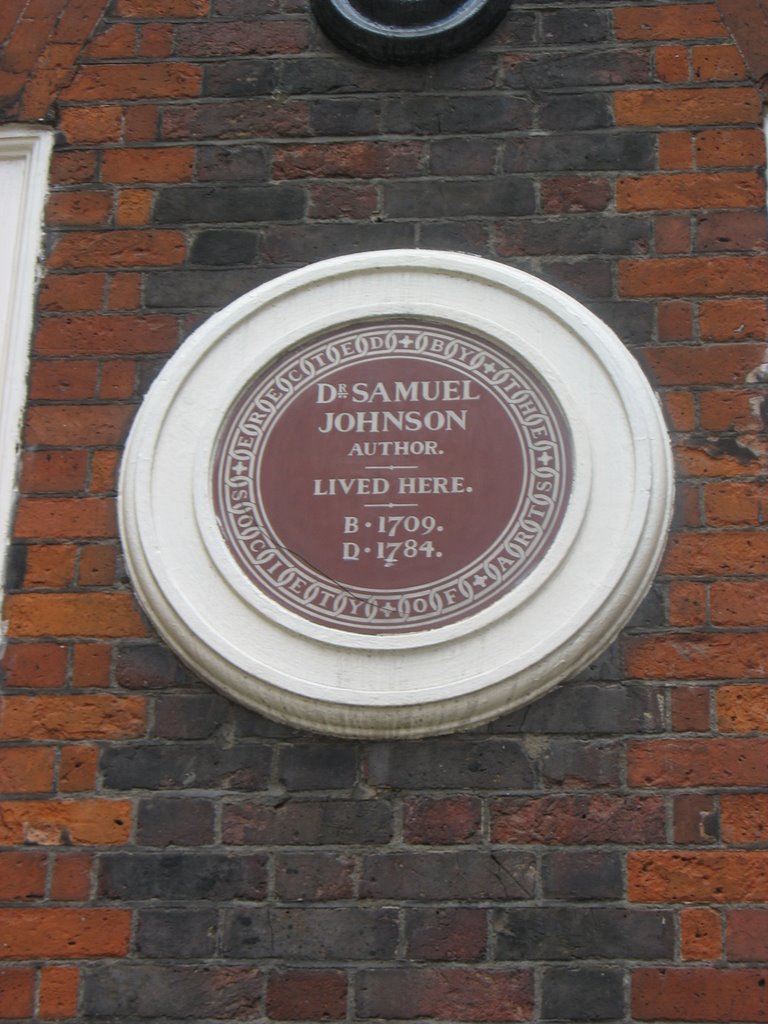
Sometimes, when the traffic, the parking, the grime, the ill tempers and the expense make me tired of London, I think of Samuel Johnson and his famous quote, “A man who is tired of London is tired of life”. Since Johnson was right about so many things, then he must be right about life and London and since, I assure myself, I am not tired of life, I should not be tired of London.

Last week, walking along Fleet Street where the traffic, noise and grime are singularly impressive, I saw a small sign pointing towards Samuel Johnson’s house. Curious and having time to spare, I ventured into the intimate passageways just north of Fleet Street that quickly take you back in time into the heart of historic London. Following the signs, I arrived at No. 17 Gough Square, and thought, “what the heck, I don’t know much about Johnson except the headlines and the house looks interesting.”

In fact, the building represents one of the few remaining residential houses of its age in the City of London. It was in this handsome house on the north side of an elegant small square that Dr Johnson lived from 1748 to 1759, to be near his publisher and it was in the attic of the house that he, along with six clerks, worked on his monumental Dictionary of the English Language.

Inside, the house has been impressively and simply restored using panelling and paint colours of the period. The furniture, prints and portraits provide plenty of human interest in the life of Johnson who rose from simple beginnings to become one of the towering masters of the English language. Only Shakespeare and the Bible are quoted more often. Included in the artefacts is a beautiful porcelain service belonging to Johnson’s friend, Joshua Reynolds, and an intriguing piece of Dickensian London can be found in the massive chain and bar over the front door, made by lady chain makers, to stop tiny children from being lowered through the small top window to open the door and rob the house. And we think we have a crime problem!

Upstairs, you can watch a video on Johnson’s life and times (note to the museum’s curator, as soon as funds are available, you need a new TV) and children have the opportunity to try on beautifully made Georgian costumes. I have seen plenty of costumes for children in museums and these were by far the nicest. There are also copies of the Dictionaries and other collections of books.

Back outside again, I stopped to admire the modern statue of Johnson’s cat, Hodge, who is sitting on a dictionary with oysters at his feet. We know about Hodge from the writings of Johnson’s biographer, Boswell, who, not being a cat lover, was shocked at the extent to which Johnson would indulge his pampered pet, even going so far as to go shopping himself for the cat’s favourite oysters.

On the way home, I reflected on how much I enjoyed this unexpected visit to Samuel Johnson’s House. The next time I am feeling a little weary from living in London, I will think not only about Samuel Johnson’s quote but also about his wonderful museum where you can happily spend an hour or so learning about the life and times of a remarkable man who never tired of London.

Dr. Johnson’s House
14 Gough Square
London EC4A 3DE
Tel: 0207 353 3745
Email: curator@drjohnsonshouse.org
Tube: Temple, Blackfiars, Chancery Lane, Holborn

Opening times: Monday to Saturday from 11am – 5:30, May to September and 11am – 5pm, October to April. Closed Bank Holidays

Admission
Adults £4.50
Children £1.50
Family £10.00

Monday, July 03, 2006

19 Princelet - Where Georgian and Immigrant London Collide

Posted by Picasa


Take a guess what was the most popular search term in today’s electronic version of the New York Times – immigration. When I put “immigration” into Google, 521,000,000 responses came back. The entry and settlement of people in a country of which they are not native gets people excited for all kinds of reasons. But it was not an interest in immigration which made me rush to 19 Princelet Street in Spitalfields for one of the rare days in the year when London’s Museum of Immigration is open to the public. No, I went looking for more of the Spitalfields’ “picturesque” which had so captured my imagination at Denis Severs House, and where one can so easily imagine the past.

Once again, Spitalfields delivered the goods and of all the strange places I have visited in my quest for uncrowded and authentic experiences, 19 Princelet Street is the strangest. Haunted, heavy with romance, tragic, this unrestored house, built in 1719, and now in a dire state of disrepair, was once the proud home of French Huguenot master silk weavers. Over the centuries, successive waves of London’s East End immigrants have left their mark on the building which the Spitalfields Centre Charity is fighting to keep out of the hands of developers and retain as a permanent resource to tell the story of the Huguenots, Irish, Jews, Bangladeshi, Somalis and others who have sought refuge in the neighbourhood.

Through the writing of Rachel Lichtenstein and Iain Sinclair, the house also achieved fame as the setting for the mysterious story of its last resident, David Rodinsky, who lived above the synagogue and sometime in the 1960s disappeared. Rodinsky’s room remained locked and undisturbed for over 20 years with the chaotic contents, newspapers, a fossilised cup of tea, porridge on the stove, a head imprint in the pillow, covered in dust and frozen in time.

As my friend Laura and I arrived at 19 Princelet, we were asked to wait outside for a while, because the house is in such bad shape that only a small number of people can be in the building at any one time. Finally, it was our turn to enter the dust filled, gloomy hallway, sign the guestbook and head for the synagogue which had been brought from Poland in 1869 and reconstructed, out of sight, in the back garden.

The synagogue, abandoned in 1963 as Jewish residents began to move to other neighbourhoods, has left behind a treasure trove of amazing stories. Along the wooden walls of the second floor ladies gallery, printed in gold lettering, one finds the honour roll of former donors. From overhead, the light which manages to penetrate the gloom of the filthy glass roof would thrill a Hollywood set director. The excavated basement once served as the meeting place of the Friendly Society set up by Ashkenazi Jews to assist victims of the pogroms of the 18th century. In the garret above, once a place for silk weavers, lived the sad and mysterious David Rodinsky.
As we entered the synagogue, I grew increasingly interested in the conversation taking place between a group of young black and Asian women, many in head scarves, who were being shown around by one of the museum guides who was explaining the persecution suffered by the Huguenots and their need to find refuge outside of France. “But weren’t they all Christians, said one of the girls. “Yes, replied the guide who went on to outline the long conflict between French Roman Catholics and Protestants. “But they were all white?” The group of girls shock their heads in disbelief.

Before my visit, I was not convinced that London needed a Museum of Immigration but with that group of perplexed girls in mind, I now think it’s a good idea. Whether the huge amount of money can ever be raised to realise this ambition appears questionable. I hate to say this, but if I had to bet, I’d put my money on the developers. I hope I am wrong. With my sad prognosis looming, I urge you to jump at the chance to see this house. There are three days left this year when the building is open to the public:

Sunday 3 September 12 - 5pmfor European Day of Jewish Culture and Heritage

Saturday 16 September 12 - 5 pm
Sunday 17 September 12 - 5 pm
for London Open House weekend (prepare for crowds)

The website gives detailed information about how to arrange a group visit. The organisers ask for at least four weeks notice and a minimum donation of £100 pounds which seems fair to me when you consider that a family ticket for such tourist trash as Madame Tussauds can set you back £74. I can only put forward the idea that any effort and expense you make to see 19 Princelet will be rewarded with a completely unique and memorable experience. If you manage to read Rodinsky’s Room before your visit, the experience will be even more informed by the stories of the lost world of the Jewish East End. In any event, try to go.

19 Princelet Street
London E1 6QH
020 7247 5352
Email: information@19princeletstreet.org.uk

Monday, June 26, 2006

Kew Gardens

Posted by Picasa

The best place I know to beat the heat in London, especially if you have children in tow, is the Royal Botanic Gardens in Kew. The 300 acre site offers a massive amount of royal and horticultural history, remarkable buildings including a historic palace, the largest collection of plants in the world, manicured gardens and lawns, a play area, and even a herd of sheep and wallabies which have been added to recreate the menageries of Kew’s past.

In many ways, Kew stands as a monument to the British monarchy's love of the great outdoors and it was the royals of the 18th century who took over, expanded and improved what we now think of as Kew Gardens. With the help of architects such as William Chambers and Capability Brown and botanists such as Joseph Banks who sailed with Captain Cook, Princess Augusta and later her son King George III transformed Kew into an exotic horticultural world unto itself.

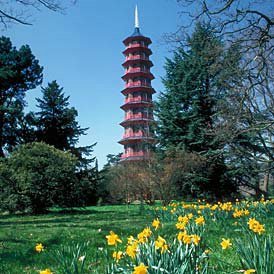
On a hot day recently, we pitched up at Kew with Eloise and were able to visit two monuments which have been closed to the public for years: the 163 foot high Pagoda and Kew Palace, the former home of King George III.

In 1761, William Chambers, inspired by visits to China, constructed the Pagoda as a surprise for Princess Augusta. How you can keep what some scholars consider the tallest secular brick building of its day a secret, I don’t know. My favourite factoid is that during World War II, holes were cut into each floor through which bomb designers would test their designs.

This summer, for the first time in recent memory, you can climb the 253 steps to the top of the structure. Eloise loved this part of our visit, particularly the extensive health and safety admonishments about what to do if you felt faint, felt chest pains, felt dizzy or generally unwell. The view from the top is nice although London is no New York or Paris from a panorama point of view. Still, the climb was a highlight of our visit.

Equally fun was our time in the newly reopened Kew Palace following a ten year restoration. Originally built by a London merchant, the house was used by the royal family between 1728 and 1818. Today, the intimate palace tells the moving story of King George III, his wife and their 15 children which began in domestic happiness and ended in madness (which we now know was illness) confinement and constitutional crisis. The decorations of the house have been restored to what they would have looked like in the early 1800s and include family memorabilia such as a doll house which the King’s daughters decorated themselves (found recently in a New York City antique store) and George III’s harpsichord.

Hauntingly, the top floor rooms have been left untouched for almost two centuries when the upstairs rooms served as a virtual prison for the King’s unmarried daughters. With Kew Palace, one gets to experience a beautifully restored, historic Royal Palace with a great story and without the crowds one finds at Kensington Palace or Hampton Court.

In addition to the Pagoda and Kew Palace, we also loved our visit to Queen Charlotte’s Cottage, a thatched rustic building which the Queen used for picnics and family retreats. The cottage was originally part of a menagerie which included such exotic animals as kangaroos and buffalo. As we walked around this perfect idyll of rural bliss, I also thought about Marie Antoinette playing shepherdess at the Petite Trianon and the craving of royals to pretend they are peasants. Eloise couldn’t be bothered with this but she did think it was an excellent idea to build a whole house just for picnics.

No visit to Kew would be complete without a “whip round” the glass houses which are justifiably famous and quite spectacular. In the Temperate House, you will find the Chilean Wine Palm which is over 16m high and is the world’s largest indoor plant. The Palm House recreates conditions similar to a tropical rainforest and in the Princess of Wales conservatory you can visit 10 different climatic zones. I’m not much of a botanist but I found the sheer scale of Kew’s collections exciting.

There are several restaurants within the Gardens. We had a snack at The Orangery Café and Restaurant found in a lovely Grade I building with a fine terrace for dining on a nice day. The Orangery also serves afternoon tea. In the Pavilion by the Pagoda, burned down by suffragettes in 1913 and rebuilt in the 1920s, there is a self-service cafeteria which also has a children’s menu.

As I write this post, our little micro heat wave has broken, Wimbledon has started and so, of course, it is pissing down rain. Equally predictable is the fact that when the tennis folks leave town, the sun will come back out and the temperatures will soar. When they do, I’ll head straight back to Kew.

Kew Gardens

Royal Botanic Gardens Kew
Richmond
Surrey
TW9 3AB
England

Information line: +44 (0)870 751 5179

Admission prices to the Royal Botanic Gardens Kew until 31 October 2006
Adult: £11.75
Concessions: £8.75
Children under 17: Free (but must be accompanied by an adult).

Please note: Admission to Queen Charlotte's Cottage is included in this price.
Admission prices to Kew Palace
Adult: £5.00
Concessions: £4.00
Children (5 - 16 accompanied by an adult): £3.00
Children under 5: Free

(NB: admission ticket to the Kew Gardens must be purchased for access to Kew Palace - for gardens admission prices see above)

Transportation

Take the District Line (Richmond Train) to Kew Gardens station or in summer take a Thames River Boat from Westminster Pier. The journey takes approximately 1 ½ hours and costs £10.50 for adults, £5.25 for children one way with family tickets also available.

Monday, June 19, 2006

The Best Things to do in London in the Heat

Posted by Picasa


Occasionally, it gets really hot in London. When it does, there is little relief for the summer visitor. Most of the transportation, accommodation and entertainment options are not air conditioned and certainly not to a level a North American visitor would expect. If you find yourself in London on one of our few fine days with temperatures soaring, I have several suggestions for places you can visit which will get you out of the concrete and away from the crowds.

My first suggestion is to do what Londoners do and beat the heat by visiting a National Trust country house, but in this case, instead of renting a car or hiring a driver, take the Underground to Osterley Park, set smack in the middle of west London. From the Underground Station on the Piccadilly Line, the Park is a half mile walk through suburban sprawl but worth the effort when one enters the park, wandering past grazing horses and cattle to arrive at Osterley House, a magnificent example of an 18th century country villa surrounded by 350 acres of parkland and gardens.

The original house at Osterley was built in Tudor times by Queen Elizabeth’s financial advisor, Sir Thomas Gresham. The crumbling Tudor mansion was acquired by the Child’s banking family in 1713 and as the family’s wealth grew, the most fashionable architect of his day, Robert Adams, was commissioned to turn the place into “the palace of palaces”. Even if you have little interest in country house interiors, you can’t help but be excited by the exuberance and elegance of these rooms. And while everyone else is sweltering back in the city centre, you can wander through this grand house essentially by yourself.

The parklands and gardens which surround the house are massive and lovely and perfect for walking. If you don’t mind hauling a picnic along with you, the grounds offer beautiful places to eat “au plein air” with lots of shade. Leftover bread is perfect for feeding the ducks. Alternatively, there is a National Trust Tea Room in the 16th century stables with outdoor tables. Although you are in the centre of a huge estate, if you have a pair of earphones left over from your airplane goody bag, bring them along because the noise from the thundering M4 Motorway, the Great West Road and the nearby Heathrow Airport belies the otherwise bucolic experience. With that said, without the audio, you would swear you were in the middle of the countryside which is not bad considering you are only a 30 minute subway ride from Piccadilly Circus.

N.B. While the grounds are open daily, access to the house is from March 4 to October 29 and the days vary according to the time of year. From March 4 – March 26, the house is open Saturday and Sunday from 1-4:30 and from March 29 – Oct 29, from Wednesday to Sunday.

Osterley Park & House
Jersey road
Isleworth, Middlesex TW74RB
Tel: 020 8232 5050
01494 755566 (Infoline)
Fax: 020 8232 5080
Osterley@nationaltrust.org.uk
Tube Station: Osterley on the Piccadilly Line


Photo of Osterley State Bedchamber courtesy of National Trust website

Tuesday, June 13, 2006

Sicily - Great in Any Weather

Posted by Picasa
Another school holiday loomed. One of our favourite things to do when all else fails is to freeload off my sister in her fab “La Dolce Vita” apartment in the ancient centre of Rome. “Could you put up with us for a few days”, I asked? “How about you meet us in Sicily for a long weekend” she countered and so the deal was struck.

Given that we only had an elongated weekend; Alexa was recommending the small village of Scopello, an easy 40 minute drive west from Palermo Airport and a short distance from the Zingarao Nature Reserve. The Zingaro , covering 4,000 acres with four miles of what many consider the most spectacular coastline in Sicily also represents one of the most intact ecological environments in the Mediterranean basin.

We were to stay at the Pensione Tranchina in Scopello, recommended by Karen Brown and others, owned and run by a Sicilian/Panamanian couple known for their warm welcome and knowledge of the local area.

A few days before our departure, a devastated Alexa called to say that the weather report for Sicily for the June weekend was uncharacteristically horrendous with rain, wind and low temperatures. One can only be philosophical about these things plus the acid test of a travel destination is whether it can charm visitors in less than charming weather. As it turned out, our weather was indeed lousy but Sicily was magical.

For us, the allure of the island centred on the combination of good beaches, exciting landscapes and coastline, great food and top tier antiquities. From our base in Scopello in the west, which is closer to North Africa than the Italian mainland, we could easily reach the empty beaches in the Zingaro Nature Reserve along well marked hiking trails. Equally accessible were the awe inspiring ancient Hellenic ruins of Selinute and Segesta and the medieval mountain town of Erice.

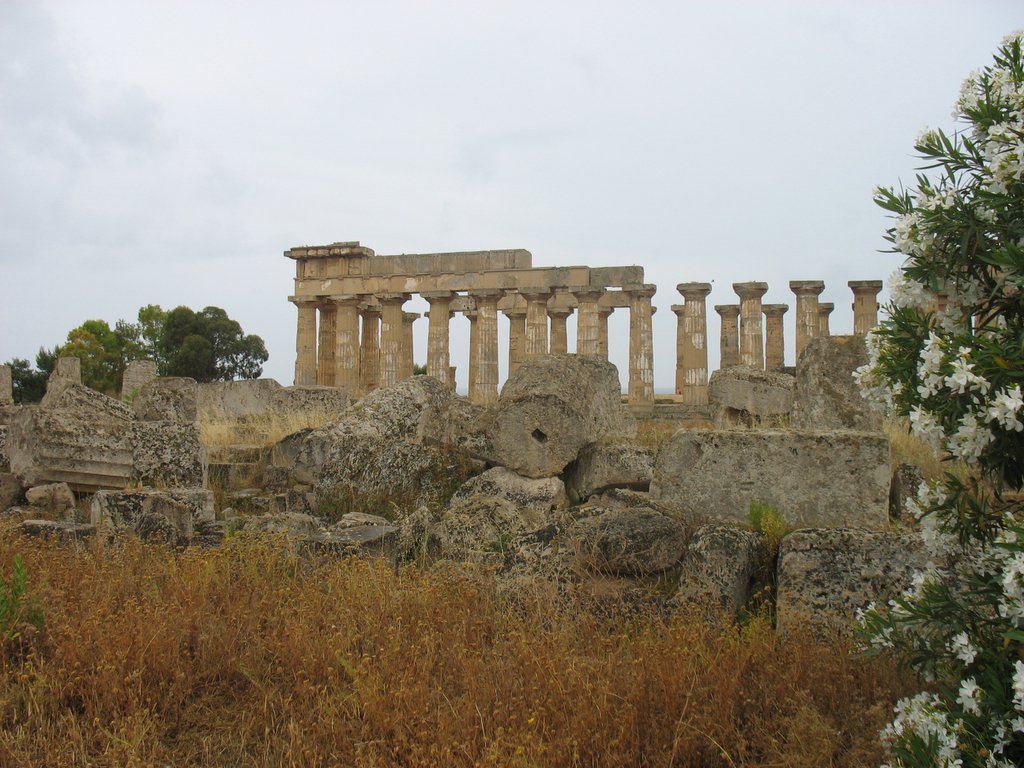
Selinute, the site of the Greek city of Selinus, lies in spectacular isolation on the coast. One has to use a lot of imagination to reconstruct the Greek colony from the collapsed temples and heaps of ancient rubble levelled over the centuries by earthquakes. Nevertheless, even our eight year old daughter was caught up in the romance of the enormous site, recounting for us the exciting tales of ancient gods and goddesses. After a heavy morning of antiquities, we had a good lunch at the Hotel Alceste in the beach resort of Marinella di Selinute, which is a five minute drive from the ruins of Selinus.

On another rainy day, we spent the morning at Segesta, the rival city of Selinus. Again, the ruins are set in dramatic isolation, this time in the middle of the countryside. More intact than Selinus with a superb Doric temple, the beautifully sited theatre proved the highlight for the children, who put on a performance of Shakespeare followed by popular songs for an appreciative audience of tourists.

Also to be recommended is the medieval mountain town of Erice towering 800 meters above sea level. On a good day, it is said that you can see both Mount Etna and Tunisia from the summit. Needless to say, we saw neither, but what we did do was have a jolly lunch at Ulisse ( the Cave of Polyphemus where the Cyclops ate 6 of Ulysses men can be found in Erice) near the main square where my brother-in-law drank the olive oil, much to the consternation of the proprietor. We visited an interesting modern art gallery, bought beautifully made non-touristy ceramics in a small shop, again off the main square and the olive oil drinking brother-in-law claims to have gotten the best old fashioned shave with a hot towel on the way back to the car. Not bad for a grey day.

Despite the uncooperative weather, I found Sicily to be a perfect No Crowds destination. The Sicilians were wonderful hosts, proud of their island and happy to share its rich heritage with an increasing number of visitors. Palermo Airport was modern, quick to get in and out of and surprisingly efficient.

Scopello proved to be an unspoiled medieval hamlet located on an incredibly idyllic stretch of coast, featured in the George Clooney film Ocean’s Twelve. In a perfect case of life imitating art, when the heist movie, Ocean’s Twelve, was filming in Scopello, several members of known Mafia families were arrested for trying to infiltrate the set, a charge which the producer of the film vigorously denies. For the record, we saw absolutely no evidence of anything sinister anywhere in Sicily, but then I’m no Julia Roberts.

Pensione Tranchina was a spotlessly clean and friendly place that offered excellent value, particularly the delicious four course dinners at €19 per person. We also had good meals in Scopello at Torre Benistra which has a beautiful outdoor terrace and Il Baglio in the courtyard.

The area around Scopello, particularly the romantic remains of the old tuna fishery, is delightful and popular with snorkelers and divers. The Zingaro Reserve is a brilliant example of conservation of which the Sicilians should be proud.

Of course our stay was too short and we visited only a fraction of what the island has to offer. But thanks to Alexa’s excellent planning, we were able to enjoy the best of Sicily on a busy holiday weekend with no crowds. We’ll be back and who knows, maybe next time in good weather.

Pensione Tranchina
Via A. Diaz n. 7
91014 Scopello
Tel: 0924541099
Fax: 0924541232
pensionetranchina@interfree.it

Torre Benistra
Via Natale di Roma
Scopello
Tel: 0924 541 128

Ulisse
Via Chiaramonte 45
Erice
Tel: 0923 869 333

Hotel Alceste
Via Alceste 21
Marinella di Selinute
Tel: 0924 46 184