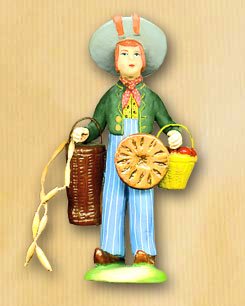
No one can deny that the Jour de Merci Donnant is a grand fete
Art Buchwald
What do Americans in America do to get ready for Thanksgiving?
Start cooking we suppose. We don’t think they head for Canada or Mexico but over here in the UK, come November, we Americans head for France on a pre-Thanksgiving booze cruise. Wikipedia describes a booze cruise as “an English colloquial term for a brief trip from Britain to France … with the intent of taking advantage of lower prices, and buying personal supplies of (especially) alcohol or tobacco in bulk quantities.”
Now ordinarily, booze cruises are pretty straight forward affairs. You get on a ferry, shop-till-you-drop, eat a great lunch and go home. But, as we all know, these are not ordinary times. To begin with, our ferry company went bust which was a very bad beginning. Undaunted, we rebooked on Eurotunnel, which is still operating a reduced schedule following a truck fire in September. OK, shit happens but it’s still not comforting. Then the pound keeps falling against the Euro, wiping out lots of the savings. Then we remember that Monday is the wrong day to shop in France when the hypermarkets are packed and the cute little specialty stores are shut. But its too late to change the booking, and so, with nothing left to do but go on this ill-fated adventure, we headed for France.
The first piece of good news was that travelling to France via the tunnel was better than we remember. Years ago, we wrote off Eurotunnel as expensive and somewhat souless and stuck with the ferries. But the whole Eurotunnel experience is superior. Its faster (35 versus 75 minutes), smoother and the highway access and loading are much easier. At £27 each way for as many passengers as you can pack in your car, its also good value. As long as fares remain competitive, we see no need to ever get on a ferry again.
For our second piece of good news, despite the insanely crowded hypermarket, we hit pay dirt on the booze, finding a good inexpensive Cote du Rhone to serve at Thanksgiving from a vineyard we like that was 50% less than what the equivalent would cost in London. We also loaded up on good champagne for what you can pay for bad champagne in the UK and just for fun we threw into our cart some oysters, duck confit, unsalted butter, cheese, fancy salt and fois gras. Even with the exchange rate working against us, between the novelty, the quality and, in the case of the liquor, the savings, we more than felt our trip was justified.
After we finished our shopping, we had an inspiring lunch at the Restaurant Le Grand Bleu in Calais that on its own could have also justified a crossing. The chef, a young man who trained with Alain Ducasse, serves up sophisticated and beautifully presented seafood specialties, such as the scallops shown above, in a simple waterside restaurant for a fraction of the price you would pay in London or Paris. We can’t remember the last time we gasped in amazement at our food but such was the case when our ultra-finely shaved tuna, responding to the heat coming from below, began dancing and shimmying across the plate. The bottom line is that it is good for the soul to eat great food and for once not feel cheated when the bill arrives. We’ll be back.
Speaking of food, it is now the Monday before Thanksgiving, and time to corner the London market in sweet potatoes and pecan pies. As Art Buchwald put it in his 1953 Herald Tribune column where he explained Thanksgiving to the French:
Start cooking we suppose. We don’t think they head for Canada or Mexico but over here in the UK, come November, we Americans head for France on a pre-Thanksgiving booze cruise. Wikipedia describes a booze cruise as “an English colloquial term for a brief trip from Britain to France … with the intent of taking advantage of lower prices, and buying personal supplies of (especially) alcohol or tobacco in bulk quantities.”
Now ordinarily, booze cruises are pretty straight forward affairs. You get on a ferry, shop-till-you-drop, eat a great lunch and go home. But, as we all know, these are not ordinary times. To begin with, our ferry company went bust which was a very bad beginning. Undaunted, we rebooked on Eurotunnel, which is still operating a reduced schedule following a truck fire in September. OK, shit happens but it’s still not comforting. Then the pound keeps falling against the Euro, wiping out lots of the savings. Then we remember that Monday is the wrong day to shop in France when the hypermarkets are packed and the cute little specialty stores are shut. But its too late to change the booking, and so, with nothing left to do but go on this ill-fated adventure, we headed for France.
The first piece of good news was that travelling to France via the tunnel was better than we remember. Years ago, we wrote off Eurotunnel as expensive and somewhat souless and stuck with the ferries. But the whole Eurotunnel experience is superior. Its faster (35 versus 75 minutes), smoother and the highway access and loading are much easier. At £27 each way for as many passengers as you can pack in your car, its also good value. As long as fares remain competitive, we see no need to ever get on a ferry again.
For our second piece of good news, despite the insanely crowded hypermarket, we hit pay dirt on the booze, finding a good inexpensive Cote du Rhone to serve at Thanksgiving from a vineyard we like that was 50% less than what the equivalent would cost in London. We also loaded up on good champagne for what you can pay for bad champagne in the UK and just for fun we threw into our cart some oysters, duck confit, unsalted butter, cheese, fancy salt and fois gras. Even with the exchange rate working against us, between the novelty, the quality and, in the case of the liquor, the savings, we more than felt our trip was justified.
After we finished our shopping, we had an inspiring lunch at the Restaurant Le Grand Bleu in Calais that on its own could have also justified a crossing. The chef, a young man who trained with Alain Ducasse, serves up sophisticated and beautifully presented seafood specialties, such as the scallops shown above, in a simple waterside restaurant for a fraction of the price you would pay in London or Paris. We can’t remember the last time we gasped in amazement at our food but such was the case when our ultra-finely shaved tuna, responding to the heat coming from below, began dancing and shimmying across the plate. The bottom line is that it is good for the soul to eat great food and for once not feel cheated when the bill arrives. We’ll be back.
Speaking of food, it is now the Monday before Thanksgiving, and time to corner the London market in sweet potatoes and pecan pies. As Art Buchwald put it in his 1953 Herald Tribune column where he explained Thanksgiving to the French:
"And so, on the fourth Thursday in November, American families sit down at a large table brimming with tasty dishes, and for the only time during the year eat better than the French do."
Over here in London, thanks to the French and that great old tradition of the booze cruise, we expect our celebrations to be very grand indeed.
Le Grand Bleu
Quai de la Colonne
8, rue Jean-Pierre Avron
62100 Calais
Tel: 03 21 97 97 98