Wednesday, September 13, 2006

Fear and Loathing on the Tourist Trail


My mother once flew across the United States with Hunter S. Thompson. I know this because I met her at the airport in Colorado where she came off the plane happily and intensely engaged in conversation with the King of Gonzo Journalism. She had absolutely no idea who he was, but let me know she had had a most entertaining flight. Thompson seemed smitten with the elegant lady in the Chanel suit. I was beside myself. Those were the days when you could smoke on planes and there was no telling what they had gotten up to. In the pantheon of cool things my Mom has done, that moment looms large.

The image of Mom with Hunter Thompson came back to me yesterday when a friend of mine sent an email in which he paid NoCrowds the highest of compliments, describing it as “Gault Millau does Hunter S. Thompson” The sender is a senior communications executive and can therefore whip off these ‘bon mots’ without breaking a sweat. But I was stopped dead in my tracks by David’s little elevator pitch because it is, in fact, the ultimate description of what I am trying to accomplish with NoCrowds, combining the detailed reporting, strong opinions and irreverence of Gault Millau with the super subjectivism of gonzo journalism. I haven’t found anyone doing this kind of writing and reporting in the ‘travel space’ yet and that’s why I started NoCrowds. Good, gonzo travel information is what this is all about.

Tomorrow we’re off to St Tropez and I’m looking forward to reporting on the scene on the Riviera in what the trade calls the “Shoulder Season”, that golden moment just before and after high season, when the weather should still be good, but the crowds mostly gone. On the plane, I’ll keep a sharp eye out for weird people to engage because, as my uber-cool mother once proved, gonzo moments are everywhere.

Photo of Hunter S. Thompson, New York City, 1979 by Allen G. Arpadi


Monday, September 11, 2006

Eating Art in London


If hunger strikes in central London, my advice these days is to head for a museum. It is remarkable how many art venues have opened serious alternatives to the “soggy sandwich” cafeteria and for visitors, it is wonderfully convenient to consume great art and good food all under one roof.

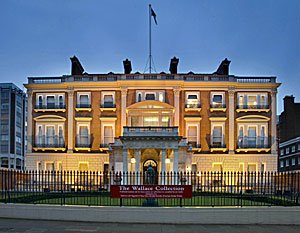
Last week, the doppelganger and I rushed over to the stately Wallace Collection on Manchester Square to be one of the first to try out Oliver Peyton’s newest addition to the eat/art club. Not that the Café Bagatelle, the previous offering at the Wallace, had been inferior. Run by the same folks who own the Jules Verne restaurant in the Eiffel Tower, Bagatelle was pretty good. But Peyton seems to be launching a one-man take-over of London museum restaurants and after our good experience at the National Dining Rooms, we were eager to see what he was up to at the Wallace.

The restaurant describes itself as “the modern answer to a typical French brassiere” which is really PR speak for the fact that they have tweaked the traditional formula. To begin with, the place doesn’t look or feel like a brassiere but the location in the central courtyard with lots of foliage and a beautiful glass ceiling make it a very pleasant venue and the colder, wetter and darker London becomes this winter, the more pleasant the Wallace will seem. The menu pays homage to some brassiere classics such as steak tartare, bouillabaisse and fruit de mer. Just back from Spain, I was tempted by the cod with beans and ham and the doppelganger had the bouillabaisse. Both dishes were good, neither were exceptional. The service was keen if not yet very efficient. We spent £45 for two. In addition to lunch, the Wallace serves breakfast from 10 to 12 and afternoon tea as well as dinner on Friday and Saturday nights.

Maybe I’ve overdosed on Oliver Peyton’s cultural formula but my “take-way” from my Wallace Collection lunch was “been there, done that”. Everything was well prepared and executed but hardly new and not exciting. Still, the Wallace is a nice place to take your mother-in-law and despite being formulaic, I really appreciate the fact that London museums are filled with good restaurants. I’m particularly eager to try the Afternoon Tea at the Wallace which could be a breath of fresh air after the stuffy and increasingly commercial experiences at the grand hotels. With an exciting looking new show featuring drawings from Versailles about to open in October, in the immortal words of The Terminator, “I’ll be back”.

The Wallace Collection
Hertford House
Manchester Square
London W1U 3BN
Tel: 020 7563 9500
www.wallacecollection.org

Photo of Hertford House taken from Wallace Collection website

Wednesday, September 06, 2006

La Villa Duflot - One for the Road

Posted by Picasa
Last summer (how sad that sounds), while waiting to meet my brother for lunch off 5th Avenue in Manhattan, I spent an unproductive 30 minutes in Borders searching travel guides for a pleasant place to stay off Interstate 95 on my return trip to North Carolina. The whole damn highway seems to have been colonised by Mariott Courtyards and the like. What I was looking for but couldn’t find was a hotel that wasn’t a chain, which was connected to its location and was run by owners. In the end, I spent a dreary night in a Hampton Inn in Spotsylvania.

By way of contrast, later in the summer, I spent a charming evening at La Villa Duflot, an individually owned and operated four-star hotel in Perpignan, France that was also just off a major highway (the A9 which links Montpellier to Spain) and next to one of the ugliest commercial zones you will ever encounter. Formerly an architect’s villa, the hotel consists of 25 rooms built around a beautiful park-like garden with sufficient foliage to hide the fact that the next door neighbour is the Auchan hypermarket.

Set in a secret garden, the retro building and eccentric artwork immediately communicate that this is a hotel run by and for “individuals” and that’s what I like about it. The rooms are of generous size, well equipped and decorated in a slightly weird but appealing art deco style. The nicest rooms are located off of the garden which has striking and unusual statues and a large and pretty pool where you can lounge around in white robes like film stars and order drinks. In summer, the glass dining room doors open completely and tables spill out into the garden beside and around the pool which provides a really romantic dining experience “en plein air”. The food is sophisticated and delicious and the restaurant is consistently filled with tables of celebrating locals.

As for cost, La Villa Duflot provides good value for money in the luxury category. We went for the Mini Suite (on the garden) with half-board which for €256 for two, considering how good the food was, seemed more than fair. In years past, we have stayed at the Domaine d’Auriac, a Relais and Chateau property down the road near Carcassone that cost double what we spent at Villa Duflot, granted it was next to a golf course rather than a supermarket.

And on a note related to its commercial location, I would be withholding information if I did not tell the little story about cavorting rats. Yes, that’s right, rats. The story goes like this. I was sitting beside the pool admiring the garden and enjoying a brilliant breakfast, when my attention was drawn to a number of small objects scurrying about on the far side of the garden. It took the longest time to believe my eyes. Mon Dieu – these are no little woodland creatures – these are rodents from next door! Anyway, it seems the rats know their place and restrict themselves to providing breakfast time entertainment on the far side of the park.

In any event, the cavorting rats did not put me off Villa Duflot. On so many criteria, this hotel delivers. It is an oasis where you least expect to find one. It is idiosyncratic and at the same time has a retro glamour that is big fun. It is comfortable, has an excellent kitchen, attentive staff and fair prices. Compared to the offerings of Interstate 95, it is paradise. What it does need, however, is a cat.

La Villa Duflot
Rond-point Albert Donnezan
66000 Perpignan
Tel: 04 68 56 67 67
Fax: 04 68 56 54 05
http://www.villa-duflot.com/
E-mail: contact@villa-duflot.com

Monday, September 04, 2006

Beating Crowds at Cadaques

Posted by Picasa

My mother-in-law tells the story of once being seated next to a woman at Bar Meliton in Cadaques who was stroking a pet leopard. That was back in the 1950s when the picturesque fishing village on the Costa Brava was not only the home of Salvador Dali and summer magnet for artists such as Marcel Duchamp, Man Ray and Max Ernst, but also a fashionable destination for well-to-do bohemians.

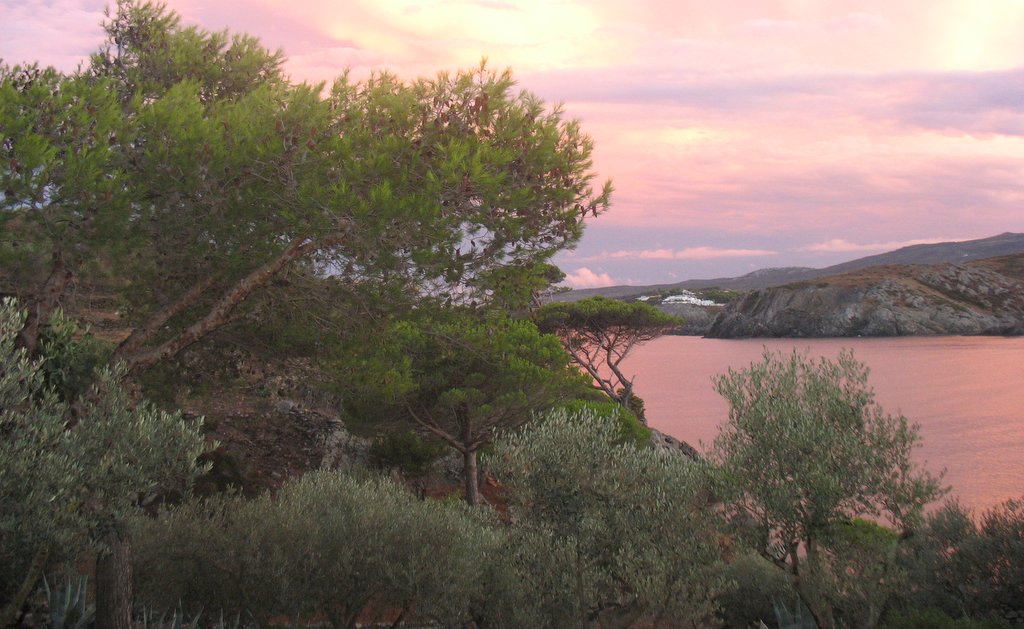
It may be difficult to find much of that raffish charm in modern day Cadaques, which has become very popular and crowded, but the area is still breathtakingly beautiful and saved from many of the horrors of mass tourism by the tortuous access road which winds along the spine of the Pyrenees, finally plunging down to the isolated, white-washed village. For stylish surroundings with artistic sensibilities and a spectacular Mediterranean setting, Cadaques offers a real alternative to the Riviera that is as beautiful, less snooty and less expensive.

I should come clean here and say that I know nothing about restaurants or accommodations in Cadaques, since my leopard-friendly mother-in-law was fortunate and forward looking enough to acquire a share of a fisherman’s hut above Cadaques in the 1950s and while the hut has been extended and modernised since then, it is still the kind of place that once you get there, which isn’t easy, you rarely leave except to buy provisions, hike, swim, ride bikes (Lance Armstrong lived and trained nearby) and fool around in boats.

And my advice to anyone considering Cadaques is to also try to rent a house outside of town where you can delight in the intoxicating Mediterranean scenery and climate, leaving behind the aggravations of finding a parking place or listening to the folks who like to party all night. If you like to party all night, then go ahead and rent a house in Cadaques. Some good sites for finding Cadaques rentals are www.ownersdiret.co.uk, www.vrbo.com and www.le-guide.com .

As for restaurants, what I do know is that the legendary restaurant many critics consider the best in the world, El Bulli, is roughly 45 minutes away in neighboring Roses. Of course reservations are beyond impossible but this year I plan to follow the advice of Clothide Dusoulier in her delightful food blog, Chocolate and Zucchini, send an email on October 15 and pray I get a table.

Once accommodations are sorted out, there are plenty of wonderful things to do in Cadaques. Here are my top recommendations

 Hike from Cadaques towards the lighthouse through the spectacular Cap de Creus National Park on an ancient, but well marked trail. Bring your swimsuit and drinking water. The nicest coves and beaches are along the way. There is a bar/restaurant at the lighthouse, the view is spectacular and the walk should take roughly 2 ½ hours each way.

 Rent a bike and take the road to Cap de Creus and reward yourself with a drink at the lighthouse. Stop along the way and marvel at the beauty of the dramatic landscape and the amazing rock formations caused over the centuries by the wicked “Tramuntana” wind which can blow you right off your bike.

 Go snorkelling. There’s plenty to see under the sea but be sure to wear something on your feet. Sea urchins are everywhere. There are also several dive centres in town.

 Visit the Salvador Dali House-Museum in Port Lligat. Even if you are not a huge fan of Dali, the house where he and his wife Gala lived from the 1930s to the 1970s will blow your mind, from the life sized polar bear that greets you in the entry to the psychedelic, El Hambra-esque swimming pool with its hilarious matador-doll fountain - it's great theatre. Reservations are essential.

Rent a boat and explore the spectacular coastline. Postpone this idea if the tramuntana is blowing. You can also rent kayaks and windsurfers.

 Sit at Bar Meliton, like Marcel Duchamp, and watch the world go by. I like to think that this is the closest thing to “Rick’s Place” from Casablanca you’ll find in the real world. Don’t miss the wall inside with Duchamp memorabilia. The lemon granitas are delicious.

As I read back over what I have written, I start to feel a little guilty. For years I have resisted writing about Cadaques. First, I promised our neighbours that I would not exacerbate the overcrowding problem by touting the areas considerable charms but this year I had a small epiphany. I finally realised that in addition to my mother-in-laws “petite paradise by the sea”, there must be other charming places to rent. Secondly, I realised that Cadaques would benefit from the interest of NoCrowds travellers. We may not all be world famous artists or celebrated bohemians but we do raise the tone of a place and appreciate getting off the tourist treadmill, valuing what is authentic and interesting about a destination. With a little luck finding a nice house and armed with the right information, it is perfectly possible to have a first class NoCrowds experience in Cadaques and the rewards are simply amazing.

Cadaques is accessible from several airports including Perpignan in France via Ryannair (one hour’s drive to Cadaques), Girona also via Ryannair (75 minutes ) or Barcelona (2 1/2 hours) in Spain. All things being equal, I would go into Perpignan and stay at one of my favourite, rather funky, hotels, the four-star Villa Duflot which I will cover in my next post.


Bar Meliton
Tel: (34) 972-258-201

El Bulli
Cala Montjoi, Roses, Spain
Tel: (34) 9 7215 0457
www.elbulli.com

Blue Rent Cadaques (boats)
www.bluerentcadaques.com
Tel: (34) 972 259 029

Bike Rentals
C/. Fontvella, 2
Tel (34) 972 25 91 01

Tuesday, August 15, 2006

We're Off to Spain

Posted by Picasa
Last summer I wrote about a 1600 kilometer drive from London to Cadaques on the Costa Brava in Spain. Well, we're at it again and I'll be reporting on how to head south through Europe with no hassles and no crowds.

Photo of Salvador Dali swimming near Cadaques

Monday, August 07, 2006

Where's the Decent Roadfood?

Posted by Picasa
This year, I resolved not to eat the revolting fast food which is the only obvious choice when travelling America’s highways. Even Eloise, after hearing Eric Schlosser, author of “Fast Food Nation”, speak in London, was off the stuff. Having read about Jane and Michael Stern’s book “Roadfood” with reviews of 600 colourful, non-franchised places for travellers to eat, I happily spent $19.95 buying the book, confident that my problem was solved. Sadly, it was not.

“Roadfood” is a nice book, don’t get me wrong, the restaurant reviews are informative and charming but, and this is a huge “but”, they don’t tell you exactly how to get from the road to the food. What I wanted to know was simple. As I am travelling up and down Interstate 95 (or any other American major highway), where can I pull off the road relatively quickly and get a decent meal and how do I get there. What I really wanted to know was the driving directions and amount of time from road to food. Sadly, on that score, “Roadfood” does not deliver.

Which brings me back to my original question, how in the world do you get a decent meal off of an American highway? Why do American travellers find the current situation acceptable? What can the travelling public do about it short of packing picnics and boycotting the whole sorry mess? Has anyone addressed the issue with a source of information that you can take on the road and gets you from the road to the food?

I do have one fabulous suggestion for anyone lucky enough to be travelling on Interstate 40 south of Raleigh, North Carolina. Go to Stephenson’s Bar-B-Q. The pork barbeque is pit cooked daily, hand chopped and specially seasoned with the best sauce you ever tasted. Stephenson’s also has wonderful fried and barbeque chicken. They have an “all you can eat”, $7.50 a head, offer that is obscene. They have hot dogs and hamburgers and fried chicken gizzards and seven choices of delicious daily vegetables. The service is VERY fast. The waitresses are nice and the tea is sweet. Most importantly, Stephenson’s is a 7-10 minute drive from the Interstate.

To find Stephenson’s, exit I-40 at Exit 319, McGee’s Crossroads. Turn right on Route 210 for roughly 2 miles to Highway 50. Turn right at Hwy. 50 and Stephenson’s is on your right about another mile up the road. This may be my favourite restaurant in America. It is off the highway and, as they say in the Michelin Guidebook which will help you find fine dining in every village and hamlet in France, Stephenson’s is absolutely “worth the detour”.

Stephenson’s BAR-B-Q
11964 NC 50 North
Willow Springs, North Carolina 27592
Tel: 919-894-4530


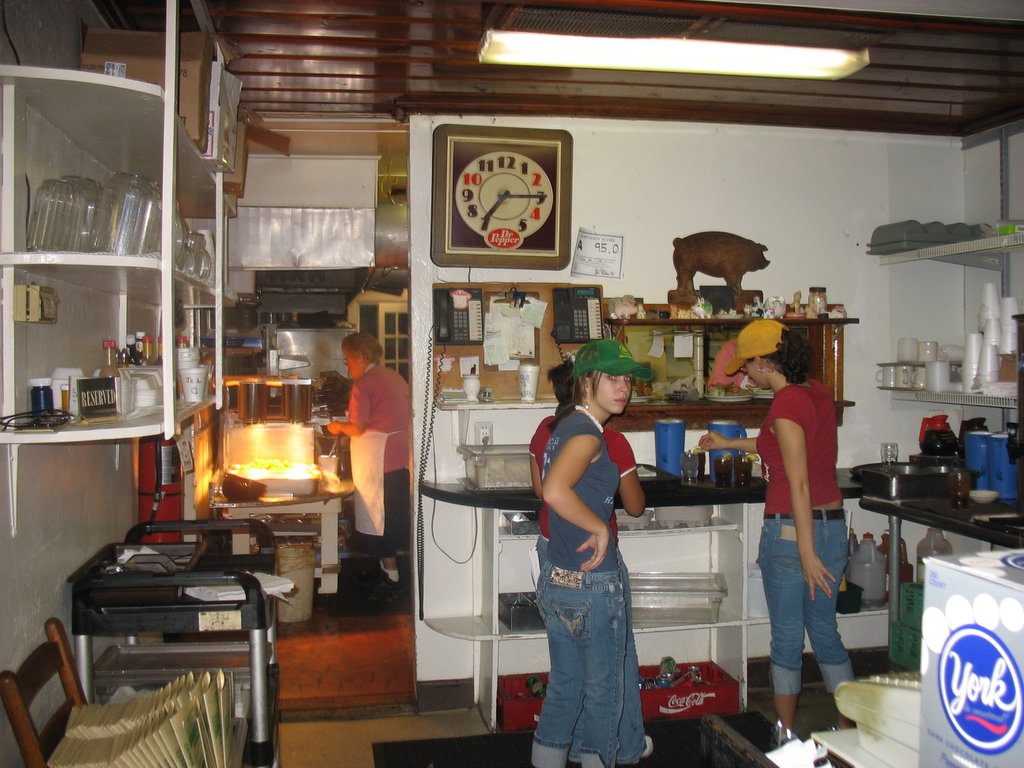
Photo of Stephenson's kitchen. For the record, I neither work for, nor have any financial interests in this restaurant. I'm just a little obsessed with it.

Friday, August 04, 2006

A Washington Museum Marathon

Posted by Picasa
Leaving North Carolina via evil Interstate 95, I headed north for New York and New Jersey, stopping for two days in Washington, D.C. To plagiarize an undisclosed member of my family, “Washington is actually a suburb masquerading as a city”. This observation goes a long way to explain why the nation’s capital is both a pleasant place to live and a pleasant place to visit.

But the prime reason to organise a stop off in Washington is to see the vast and spectacular collections of the 18 institutions which comprise the Smithsonian National Museums, most of which are both free and within walking distance of each other. I know of no other place in the world where you can see and learn about more things with greater ease, for less money, than on the Mall in Washington. And it’s not just paintings and sculpture. Included in the Smithsonian club are the American Indian Museum, the Air and Space Museum, the Natural History Museum, the Postal Museum, the Zoo and the American History Museum.

Of course, in any ointment there is a fly and the fly on the Mall is crowds. It’s understandable given what’s on offer and all free, but these really are not like the crowds that you find in congested “old” Europe (maybe the goofiest thing Donald Rumsfeld has ever said), because, like many things American, the place is huge, insuring that a preposterous number of people can be absorbed before things begin to feel crowded. While some of the museums such as Air and Space can be quite crowded, a number of superb museums, such as the Freer and the Sackler Gallery, can seem all but deserted.

During my visit to D.C., I spent a whole day in the museums on the Mall, seeing three first class special exhibitions, one brand new museum and two collections in the newly refurbished National Historic Landmark which Walt Whitman once described as the noblest building in Washington.

I started my museum marathon at the Freer Gallery of Art which has major Asian and American holdings. The museum is cool, serene, with a lovely centre courtyard and filled with much appreciated curatorial touches such as the ample provision of magnifying glasses for the Asian works with tiny details. The Japanese collection has the largest holding of Hokusai in the world. Whistler’s Peacock Room is beyond fabulous, as are the other 70 oil paintings Freer bought from Whistler for his collection. Don’t miss the exciting gift shop at the Sackler which has everything from fabulous origami kits to Shangai Tang clothing and accessories.

One of the best aspects of my visit was the opportunity to see three superb special exhibitions – Asian portraiture at the Sackler, Anslem Kiefer at the Hirshorn Museum and Sculpture Garden and the Art of Native Americans of the North Pacific Coast at the National Museum of the American Indian. By London standards, I waltzed, unticketed, into shows whose costs would have totalled roughly $50 with no waiting and no hassle. I found the whole experience amazing.

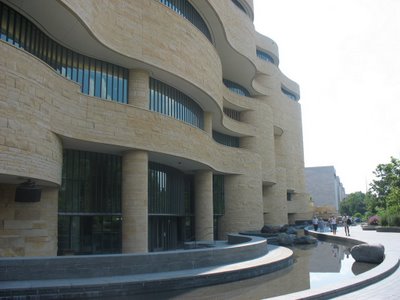
Another highlight of my museum marathon was my visit to the National Museum of the American Indian, established by an Act of Congress in 1989 and opened in 2004. It’s strange but every Washingtonian I talked to about this place found it disappointing. The throngs, who were there when I visited, and I, certainly disagree. I think the mistake is to have the same expectations for this place as one would have for a traditional museum. The American Indian Museum is more of a theatrical experience or a "happening" than a home for a formally curated collection and I loved this effect, as did the army of children who were there with their camps, their parents and their summer enrichment programs.

Using Eloise’s museum criteria of preferring places with lots of things to do, the Museum of the American Indian is an absolute winner. There are so many things to get excited about, for example, the unbelievable building designed by Douglas Cardinal (Blackfoot) and a team of Native American architects, the excellent introductory and other films on offer and the food available at the Mitsitam Café on the first level which serves a broad range of delicious and intriguing meals based on the indigenous foods of the Americas. Certainly, the museum was crowded, and I don’t say this very often, but I think it is worth coping with the crowds to visit this exciting new addition to the Washington’s museum landscape.

I finished my museum marathon at the recently reopened Donald W. Reynolds Center for American Art and Portraiture in the National Historic Landmark near Chinatown in downtown Washington which is roughly a 5 to 10 minute walk from the north side of the Mall. Talk about a fabulous building, the freshly renovated National Historic Landmark is considered one of the finest examples of Greek Rival architecture in the United States. As beautiful as the building is, the way the two museums inhabit the structure makes absolutely no sense and has to be considered a failure. I don’t know but when I was working for a bank that had warring departments, we ended up with projects that looked and felt exactly like this place. For the life of me, I couldn’t figure out where the American Art collection stopped and Portraiture began and vice versa and the guides and literature seem to fudge the issue. If the heads of these two museums are on speaking terms, I would be amazed. If they are, they need to straighten out how they are going to co-exist going forward.

Leaving this criticism aside, there are lots of things to love in the collections. The portrait gallery is a fun and informative American history lesson as seen through the faces of the folks who made the history. The American Art collection had some iconic pieces by artists such as Edward Hopper which are part of the visual memory of the United States. Since I had just finished a big lunch at the Museum of the American Indian, I did not stop in the Upper West Side or Portico Cafes but both looked very inviting.

All in all, I spent a total of seven hours sampling some of the finest art and culture that America, and the world for that matter, has to offer. I spent a total of $7.50 for my lunch. Only in the Museum of the American Indian were there crowds of any significance. It was one of the best days I have had in a long time and for all my current ambivalence about the United States and this administration’s deranged foreign and domestic policies, my museum marathon on the Mall provided a much appreciated moment when I was once again proud to be an American.
General Smithsonian Information

Tel: 202-633-1000 (voice/tape)
Recorded Information: Dial-a-Museum, 202 357 2020
http://www.smithsonian.org/ or http://www.si.edu/
Email: info@ si.edu

Most museums are open daily from 10AM – 5:30 PM.
The Donald W. Reynolds Centre for American Art and Portraiture is open from 11:30 AM – 7:00 PM
All are closed December 25
There is a Smithsonian Information Centre in the Catle on the Mall, open daily from 8:30AM- 5:30 PM

Photo of the Museum of the American Indian